The short answer
Shared digital screen (a slot in the loop): about $20,000 to $50,000 per four weeks.
Static bulletin in or near the square: about $10,000 to $25,000 per four weeks.
Tower screens and exclusive takeovers: from about $100,000 per month.
Multi-screen roadblocks and New Year's Eve: well into six figures, sometimes more.
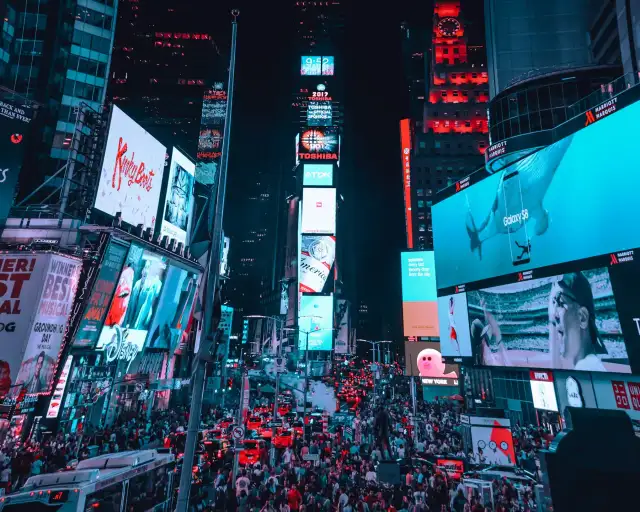
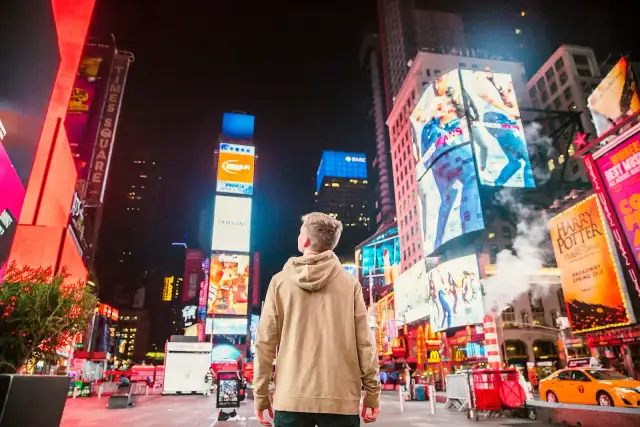
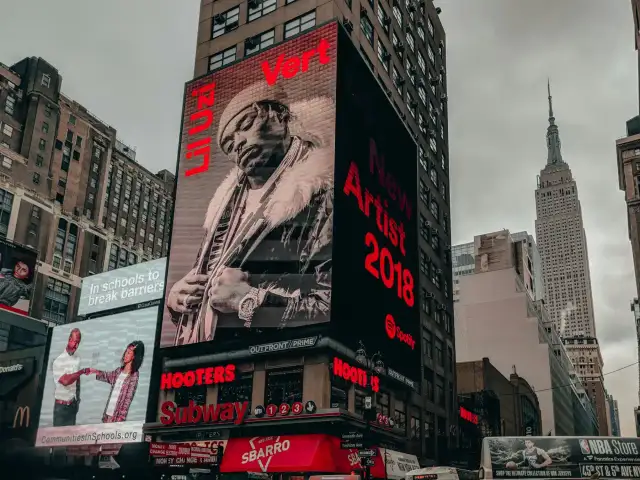
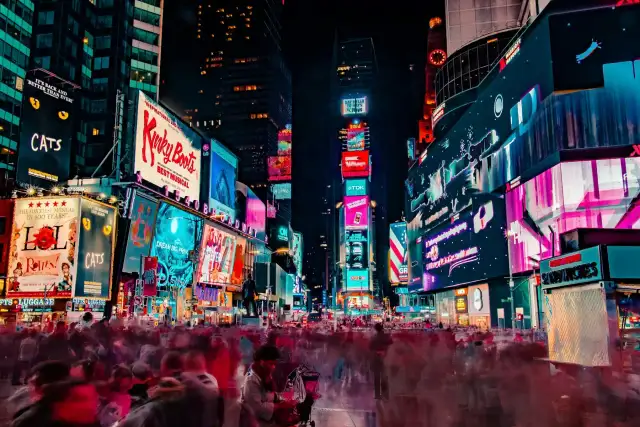
Times Square is the most expensive advertising district in the United States, but it is not one price. It is dozens of screens and bulletins owned by different media owners, each sold in its own way: a few seconds inside a rotating loop, a fixed share of every hour, or the whole screen. The figures above are typical ranges from public rate reporting; the real number for your dates depends on availability, season and how much of the screen you want.
Prices by format
| Format | Typical cost | What you get |
|---|---|---|
| Static bulletin near the square | $10,000 to $25,000 / 4 weeks | One printed or vinyl image, lit, visible 24/7 |
| Digital screen, shared loop | $20,000 to $50,000 / 4 weeks | A short spot (often 8 to 15 seconds) repeating in a loop shared with other brands |
| Premium digital, high share of voice | $50,000 to $100,000 / 4 weeks | A larger share of the loop on a prime screen |
| Tower screens and full takeovers | $100,000+ / month | Exclusive use of a landmark screen for a period |
| Synchronized multi-screen roadblock | Priced per project | Several screens running the same creative at the same moment |
Media is usually sold in four-week periods, so "per month" in rate cards normally means four weeks. Subway and street-level digital networks around Midtown cost less per screen and are often added to a Times Square buy to extend reach.
What drives the price
- Position in the bowtie. Screens facing the central pedestrian plazas and the TKTS steps, where people stop and look up, cost more than side-street faces.
- Size and type. Full-motion digital costs more than static, and the tallest tower screens carry the highest premium.
- Share of voice. A short spot in a long loop is the entry point. Doubling your share, or owning the screen outright, multiplies the price.
- Flight length. Four weeks is the standard unit. Longer commitments usually lower the weekly rate; very short flights cost more per day.
- Season. Q4, the holiday weeks and New Year's Eve are the most expensive and the first to sell out. January and late summer are usually easier to negotiate.
- Creative. Motion and 3D anamorphic content cost more to produce and may need specific screens that support them.
Costs beyond the media
- Creative production. Every screen has its own resolution, aspect ratio and spot length. Adapting one idea to several screens is a production job in itself, and 3D anamorphic builds are priced separately.
- Printing and installation for static bulletins.
- Content approval. Media owners review every creative against their content standards. Allow time for revisions, especially for alcohol, gambling, political or health claims.
- Capture. Most brands want photos and video of the placement for social media and press. Budget for a photographer or a filmed capture of the launch hour.
Audience and cost per thousand
Times Square screens are measured by Geopath, the audience currency for US out-of-home, and every media owner quotes rated impressions for the flight you book. The footfall behind those ratings is large: the Times Square Alliance counted roughly 220,000 pedestrians entering the square each day in 2024, and up to 330,000 on the busiest days.
That makes cost per thousand impressions (CPM) a fairer comparison than the headline price. As an example, a $30,000 four-week buy rated at 20 million impressions would work out to a CPM of $1.50. Ask for the rated impressions on every screen you are quoted and compare on that basis.
Is it worth it?
For a brand that only needs local reach, there are cheaper ways to reach New Yorkers. Times Square earns its price when the placement itself becomes the story:
- Launches and announcements, where the photo of your brand in Times Square is used in press, social and sales decks.
- International brands entering the US, which use the square to signal arrival to buyers, retailers and investors.
- Moments people share. Times Square is one of the most photographed places in the world, so a placement timed to a release or keynote travels far beyond the people standing there.
Ways to spend less
- Buy a share of a loop instead of the whole screen, and hold one hero screen rather than many.
- Run your peak moment for one or two weeks on premium screens, then keep presence on lower-cost street-level or subway screens nearby.
- Avoid Q4 and holiday weeks unless the date is fixed by your launch.
- Plan the capture: one well-shot photo of a single screen can do more for a launch than four weeks on several screens nobody films.
How to book a Times Square billboard
- Set the goal and the date. A launch hour, a week of presence or a month-long campaign need different screens.
- Check availability across media owners for your dates, and compare formats on price, audience and share of voice.
- Confirm specifications and approvals. Each screen has its own specs and content review.
- Produce and deliver creative before the media owner's deadline.
- Run and report: proof of play, photos, and audience figures for the flight.
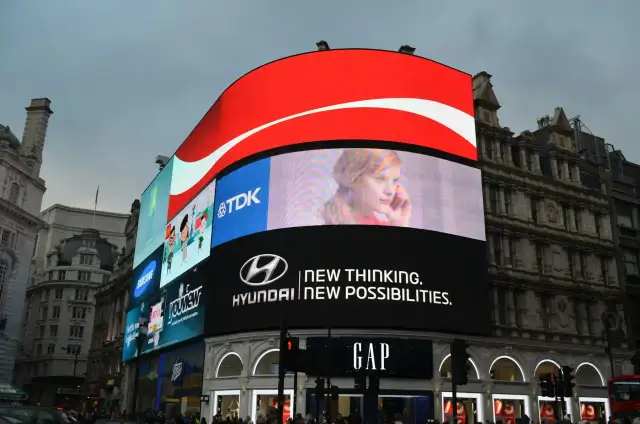
NVLN Partners plans and buys Times Square screens through our partners, alongside landmark sites such as Piccadilly Circus and multi-city campaigns in more than 80 countries. Tell us your dates and we will come back with live options and prices.
Sources
- Times Square Alliance, market research and pedestrian counts
- Geopath, US out-of-home audience measurement
- Public rate reporting from US out-of-home marketplaces and agencies, 2024 to 2026
- Solomon Partners, 2025 US major media CPM comparison (OAAA)
- ThePricer, billboard advertising cost ranges, including premium sites